
An Investor Briefing on Tokenization, Strategic Bullion, and the Repricing of Real Assets
1. Introduction: A Quiet Transformation
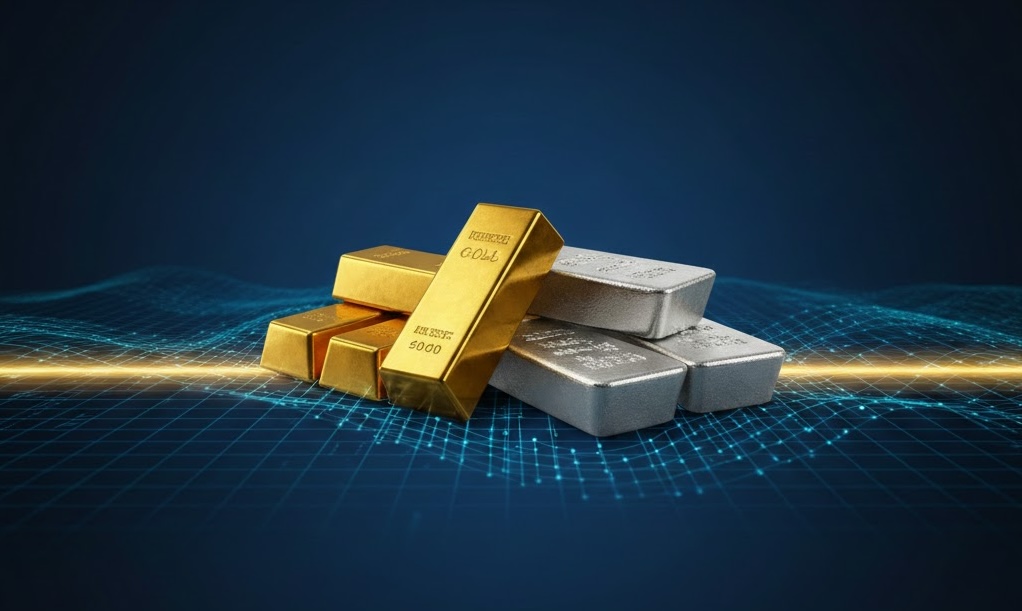
Global finance is undergoing a transformation that few fully grasp. The United States and China are quietly amassing unprecedented quantities of gold and silver. This is not nostalgia, nor a hedge against hyperinflation; at least not in the traditional sense. It is a deliberate repositioning for a future in which monetary trust is collateralized, tokenized, and auditable.
At the same time, investors are rediscovering commodities, not as a cyclical trade but as structurally critical assets. Energy, industrial metals, and strategic minerals are reasserting themselves as central to both economic growth and monetary security. Together, these trends are reshaping global finance: gold anchors trust, silver provides liquidity, and other commodities form the operational backbone of modern economies.
For Canada, this dual shift presents a paradox. The country holds abundant resources yet maintains virtually no sovereign gold reserves. Its rising debt amplifies vulnerabilities, even as its mines and energy assets position it as a key beneficiary of the global commodity rotation. Understanding these dynamics is critical for investors seeking to navigate this new era.
2. U.S. and China: Accumulating Strategic Collateral
Both the United States and China are preparing for a world in which currency credibility is measured by collateral, not rhetoric. While the U.S. quietly increases bullion holdings through ETFs, Treasury-adjacent institutions, and private proxies, China openly expands both gold and silver reserves.
For the U.S., gold provides optionality. It strengthens confidence in a tokenized dollar without forcing a return to a classical gold standard. Silver, with its dual industrial and monetary nature, complements this strategy. Demand for silver is rising in sectors critical to modern infrastructure: AI, solar power, EV batteries, semiconductors, and defense applications. In this way, silver serves both as a monetary instrument and as an economic lever.
China’s strategy is more overt. By accumulating both gold and silver, it strengthens the yuan’s international credibility while simultaneously supporting industrial policy. Silver, in particular, has a dual role: it underpins the industrial base required for energy transition, defense technology, and electronics, while also serving as a potential secondary collateral layer in tokenized yuan settlements. Gold and silver purchases allow China to construct a parallel, commodity-backed settlement system that can operate independently of U.S.-dominated financial infrastructure.
Together, these accumulation strategies indicate a new era of monetary competition, in which hard assets provide credibility, and tokenized systems offer the means to deploy them efficiently.
3. Tokenization: Mechanism Meets Collateral
Tokenization is the structural mechanism linking bullion accumulation to future monetary systems. Programmable currencies allow central banks and governments to anchor trust in hard assets rather than abstract promises. Gold serves as primary collateral, silver as secondary collateral and liquidity, and other industrial commodities as the operational backbone of the tokenized system.
Tokenized assets bring:
- Real-time settlement, reducing counterparty and credit risk
- Transparent, auditable reserves, increasing credibility
- Hybrid models, combining fiat flexibility with hard-asset backing
This architecture allows gold and silver to return to monetary relevance without requiring a full-scale gold standard. At the same time, tokenized industrial and energy commodities, such as copper, lithium, uranium, oil, and rare earths, become strategically indispensable, supporting infrastructure, energy grids, defense systems, and the digital economy.
4. The Global Capital Rotation Into Commodities
Simultaneously, a significant structural shift is underway: capital is rotating from over-financialized assets into real commodities. This is not a cyclical correction; it is a structural repricing driven by multiple forces:
- Decades of underinvestment in metals and energy
- Supply chain regionalization and strategic security considerations
- Rising demand for energy, industrial metals, and rare earths driven by AI and decarbonization technologies
- Inflation volatility and eroding trust in long-duration bonds
- Fiscal overreach in developed economies
The result is a world in which commodities reassert themselves as central to global economic and monetary stability. Gold and silver gain as monetary anchors, while other commodities—copper for grids, lithium for batteries, uranium for nuclear stability, rare earths for high-tech applications, oil and gas for industrial logistics—emerge as indispensable enablers of the system.
5. Canada: Resource Wealth Versus Policy Weakness
Canada occupies a unique and challenging position in this evolving landscape. Historically, Canadian policy has focused on increasing federal debt while selling gold reserves, leaving the country without a tangible monetary anchor. As global financial systems become collateral-based, Canada’s lack of sovereign gold reserves and rising debt levels expose structural vulnerabilities.
Yet Canada remains exceptionally resource-rich. Its mines produce gold, silver, copper, uranium, lithium, nickel, and rare earths, while energy assets position it as a strategic supplier of industrial commodities. Silver, in particular, offers a stealth advantage: it supports both industrial production and tokenized monetary systems, allowing Canada to influence the evolving financial architecture even without holding reserves directly.
Canada’s performance in this environment is therefore dual-faceted:
- Strengths: Resource production, geopolitical stability, skilled mining workforce, proximity to U.S. capital
- Weaknesses: Lack of sovereign bullion, rising debt, dependence on foreign monetary infrastructure
The result is a country positioned to supply the materials anchoring the new system, but one that lacks direct leverage in the tokenized monetary landscape.
6. Other Commodities: The Operational Backbone
Gold and silver anchor trust, but industrial and energy commodities define capability. As tokenized systems rise and capital rotates into real assets, the entire commodity ecosystem benefits:
- Copper & aluminum: Critical for energy grids and industrial infrastructure
- Lithium & cobalt: Essential for batteries and energy storage
- Uranium: Provides stable base-load energy for industrial systems
- Rare earths: Power AI, defense, and high-tech manufacturing
- Oil & natural gas: Supply the energy foundation enabling commodity production and industrial operations
Investors should view these assets as monetary-adjacent commodities, whose scarcity and criticality amplify in a world anchored by tokenized gold and silver.
7. Investment Implications
For investors, the implications are clear:
- Gold and silver: Acquire for structural, not speculative, purposes. Gold anchors tokenized monetary systems, silver provides both liquidity and industrial relevance.
- Industrial and energy metals: Copper, lithium, uranium, rare earths, and oil & gas will benefit structurally from a world rotating into commodities.
- Mining equities: Miners and royalty companies gain leverage from rising scarcity and tokenized collateral demand.
- Canada-focused strategies: Favor resource production, royalties, and strategic energy plays while exercising caution with debt-sensitive and domestic financial assets.
- Digital infrastructure: Custody, tokenization platforms, and programmable commodity instruments become a core part of the investment landscape.
8. Conclusion: A New Hard-Asset Century
A new era is emerging in which monetary systems are increasingly collateralized by gold and silver, and industrial and energy commodities form the operational backbone of the global economy. Tokenization enables this transition, creating liquidity, auditable reserves, and programmable settlement systems.
Canada, despite holding no gold, benefits indirectly from its resource endowment—but policy choices and rising debt expose structural vulnerabilities. For investors, the opportunity is in positioning across:
- Precious metals
- Industrial and energy commodities
- Miners and royalty companies
- Tokenized infrastructure linked to real assets
This is not a fleeting cycle. It is a structural recalibration of value, where gold anchors trust, silver provides liquidity, and other commodities enable the system. Investors who recognize this shift early, and position accordingly, stand to benefit from a century in which hard assets reclaim their centrality in global finance.
About Moneta
Moneta is an investment banking firm that specializes in advising growth stage companies through transformational changes including major transactions such as mergers and acquisitions, private placements, public offerings, obtaining debt, structure optimization, and other capital markets and divestiture / liquidity events. Additionally, and on a selective basis, we support pre-cash-flow companies to fulfill their project finance needs.
We are proud to be a female-founded and led Canadian firm. Our head office is located in Vancouver, and we have presence in Calgary, Edmonton, and Toronto, as well as representation in Europe and the Middle East. Our partners bring decades of experience across a wide variety of sectors which enables us to deliver exceptional results for our clients in realizing their capital markets and strategic goals. Our partners are supported by a team of some of Canada’s most qualified associates, analysts, and admin personnel.